Blog · privacy
Password-Protected File Links
2026-10-25 · 12 min read · XtremeShare Editorial
Industry how-to. Do not claim XtremeShare homepage offers this until the UI ships. Mention backend-only as a product note in the registry, not as a public promise. No account required.
Password-Protected File Links matters whenever email, chat apps, or mismatched native tools get in the way. This guide focuses on practical password protected file link using a modern browser — without inventing product features XtremeShare does not have.
Industry how-to. Do not claim XtremeShare homepage offers this until the UI ships. Mention backend-only as a product note in the registry, not as a public promise.
What people usually mean by “password protected file link”
Searchers looking for password protected file link typically want a fast handoff, fewer accounts, and a path that works across devices. Some need delayed cloud downloads; others can stay online together. XtremeShare is built for the live browser peer-to-peer case.
How to do it with XtremeShare
- Open https://xtremeshare.cloud in a modern browser — no account needed.
- Drop one or more files into the share panel.
- Optionally enable password protection before creating the room.
- Copy the share link or show the QR code to the recipient.
- Keep the sender tab open until the receiver finishes (resume if the connection drops).
What privacy can honestly mean
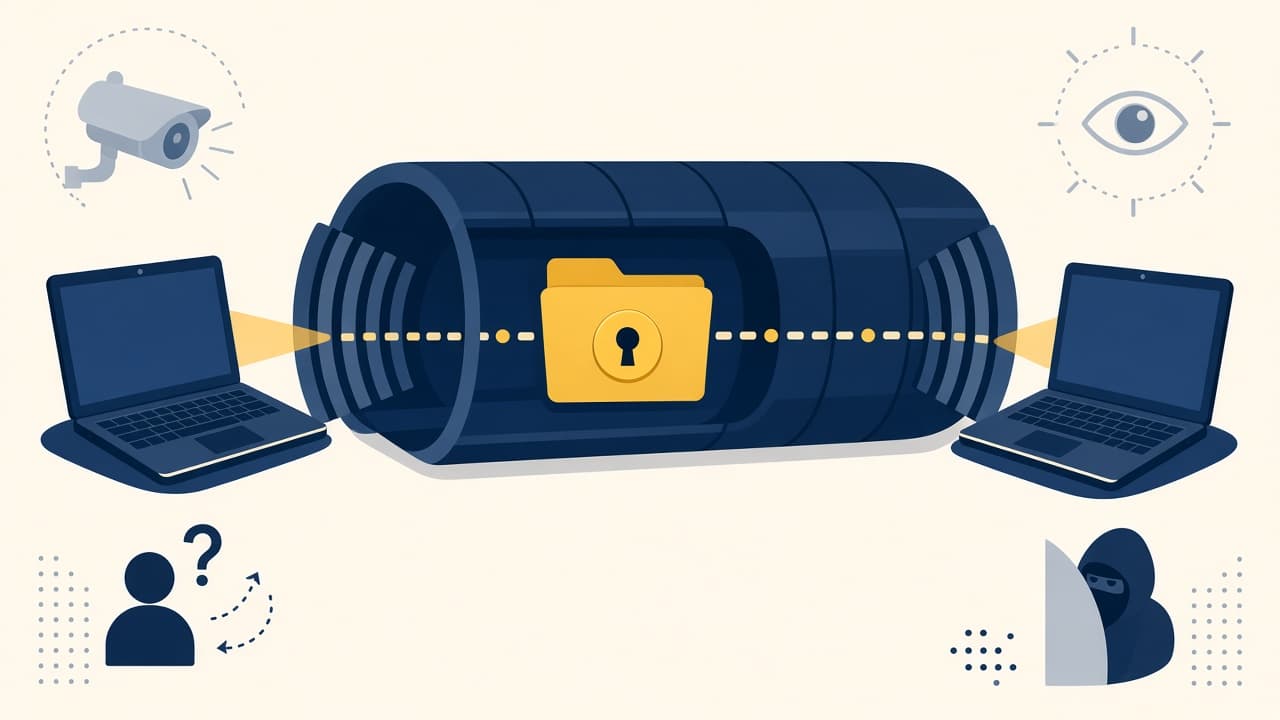
For password protected file link, separate myths from mechanics: XtremeShare stores room metadata and signaling, encrypts chunks in the browser, and does not keep a lasting cloud archive of file bytes on the live P2P path. Filenames can still appear as metadata — avoid secrets in the name itself.
When to choose another tool
- The recipient must download days later while you are offline — use cloud storage.
- You need collaborative editing and version history — use a drive product.
- Compliance requires a specific managed-file-transfer vendor — follow that policy.
- Either browser lacks working WebRTC on the current network — try another network or a storage link tool.
Limitations to know up front
- Sender availability is required during the receive.
- Filenames and sizes are room metadata.
- Strict NATs may need TURN for connectivity.
- There is no platform size marketing cap, but browsers and networks still impose practical limits.
- Lost links are not recoverable from a user account, because there is no account.
FAQ: password protected file link
Do I need an account for password protected file link?
No. XtremeShare lets you start from the browser without creating an account, email, or credit card.
Are my files uploaded to a cloud folder?
On the live path, file bytes move between browsers over a WebRTC data channel. XtremeShare stores room metadata and signaling, not a lasting archive of your file contents.
Can I resume if the transfer pauses?
Yes. Progress can be saved on the receiver; continue from offsets when the sender is still sharing the same room.
Next step
If password protected file link is your job today, open XtremeShare, create a share, and keep your tab available for the peer-to-peer handoff. Continue with related guides below, or read How it works and the FAQ for product details.